
Gas and Oil Furnace Repair in Wayne
A forced-air furnace in Wayne is usually a gas furnace in the basement, garage or a utility closet, with central air sharing the same ducts. A smaller number still burn oil: about 2 percent of Wayne homes heat with fuel oil, against about 87 percent with gas (Wayne home heating fuel). We repair standard efficiency furnaces vented into a chimney or metal flue, condensing furnaces vented through PVC pipe, and oil furnaces with a burner on the front.
Furnace repair covers these parts:
- Hot surface igniters and spark igniters
- Flame sensors, so burners stop lighting and shutting off seconds later
- Inducer motors, pressure switches and their hoses
- Gas valves and burner assemblies
- Blower motors, run capacitors, variable speed modules and dirty blower wheels
- High limit and rollout switches, door switches and fuses
- Control boards, transformers and thermostat wiring
- Condensate traps, drain lines and condensate pumps on high efficiency furnaces
- Oil burner nozzles, filters, pumps, electrodes and cad cells
Furnace Heating Repair Through a Wayne Winter
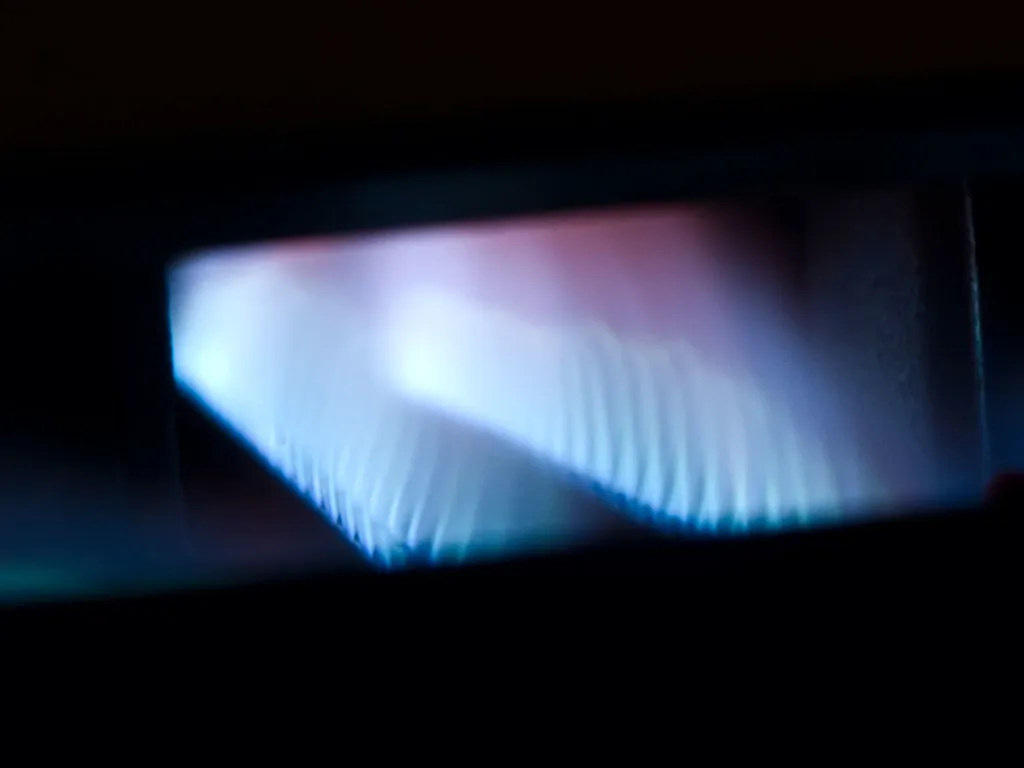
NOAA's normals for the Little Falls station, just south of Wayne, show about 5,286 heating degree days a year against about 975 cooling degree days, and a January average low near 22 degrees (NOAA 1991 to 2020 normals). The heating load here is about five times the cooling load, so a Wayne furnace runs from October into April. Igniters crack after thousands of starts, flame sensors coat over, inducer and blower motor bearings wear and filters load up through the winter. A clogged filter starves the furnace of air, the heat exchanger overheats and the limit switch shuts the burners off, which looks like a furnace that runs for a few minutes and quits.
Furnace Repair for Wayne Split-Levels, Ranches and Colonials
Two thirds of Wayne homes were built before 1980, and about 68 percent are single-family detached houses. Furnaces in those houses often feed ducts that were first sized for heat only, before central air was added, and returns that are too small for the blower. Split-levels and colonials commonly have upstairs rooms that run cold in winter and hot in summer. Those are duct and airflow problems as much as furnace problems: a blower on the wrong speed, a closed damper, a crushed flex duct or a single return in the hallway.
Basement furnaces near the river also take flood damage. A furnace that sat in water needs its burners, gas valve, blower motor and control board replaced or tested before it runs.
Oil Furnace Repair in Wayne
Oil furnaces and oil burners fail at the fuel end more than anywhere else. A clogged nozzle or filter, a fuel pump that lost its prime, sludge drawn up from the bottom of an old tank and a dirty cad cell that cannot see the flame all cause a burner that starts, runs a few seconds and locks out. Electrodes and ignition transformers wear out as well. Yearly cleaning keeps an oil burner lighting cleanly and keeps soot off the heat exchanger.
Homes with a boiler instead of a furnace are covered under boiler repair in Wayne. For the cooling side of a forced-air system, see AC repair in Wayne. We repair furnaces in Pompton Plains, North Haledon, Totowa and across the Wayne service area.